
Manufacturing
Stainless steel is the abbreviation for stainless and corrosion-resistant steel. The steel types that are resistant to weak corrosive media such as air, steam, water, etc., or have stainless properties are called stainless steel; while the steel types that are resistant to corrosion by chemical media (such as acids, alkalis, salts, etc., through chemical immersion) are called acid-resistant steel.
In practical applications, steel that is resistant to the corrosion of weak corrosive media is often referred to as stainless steel, while steel that is resistant to the corrosion of chemical media is called acid-resistant steel. Due to the differences in chemical composition between the two, the former may not be resistant to chemical media corrosion, while the latter generally has stainless properties. The corrosion resistance of stainless steel depends on the alloy elements contained in the steel.
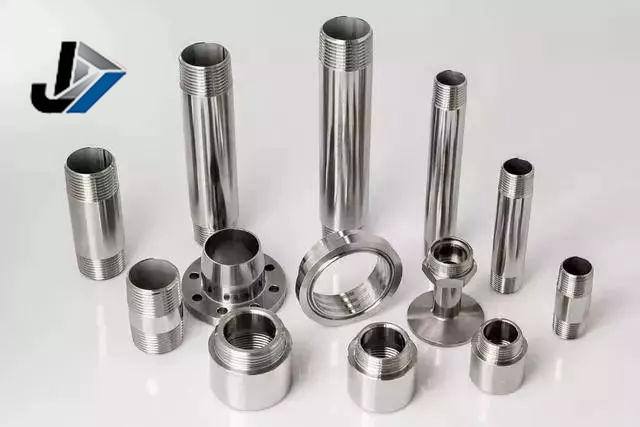
Common classifications:
It is usually classified by metallographic structure as:
Austenitic stainless steel, ferritic stainless steel, martensitic stainless steel.
Based on these three basic metallographic structures, for specific requirements and purposes, duplex steel, precipitation-hardening stainless steel and high alloy steel with an iron content of less
than50% have been derived.
1. Austenitic stainless steel.
The matrix is mainly composed of austenite structure (CY phase) with face-centered cubic crystal structure, non-magnetic, and is strengthened mainly through cold processing (and may result in some magnetism). It is marked by the numbers 200 and 300 series by the American Iron and Steel Institute, such as 304.
2. Ferritic stainless steel.
The matrix is mainly composed of ferrite structure (a phase) with body-centered cubic crystal structure, magnetic, generally cannot be hardened by heat treatment, but can be slightly strengthened through cold processing. It is marked by 430 and 446 by the American Iron and Steel Institute.
3. Martensitic stainless steel.
Stainless steel with a martensitic matrix (body-centered cubic or cubic), magnetic properties, and its mechanical properties can be adjusted through heat treatment. The American Iron and Steel Institute marks it with the numbers 410, 420 and 440. Martensite has an austenitic structure at high temperatures. When cooled to room temperature at an appropriate rate, the austenitic structure can transform into martensite (i.e., hardened).
4. Austenitic-ferritic (duplex) stainless steel.
The matrix of the stainless steel has a two-phase structure of austenite and ferrite, with the content of the less common phase matrix generally greater than 15%. It is magnetic and can be strengthened by cold working. 329 is a typical duplex stainless steel. Compared with austenitic stainless steel, duplex steel has higher strength and significantly improved resistance to intergranular corrosion, chloride stress corrosion and pitting corrosion.
5. Precipitation-hardening stainless steel.
This type of stainless steel has an austenitic or martensitic matrix and can be hardened through precipitation hardening treatment. The American Iron and Steel Institute marks it with the 600 series numbers, such as 630, which represents 17-4PH.
Generally speaking, except for alloys, the corrosion resistance of austenitic stainless steel is quite excellent. In environments with lower corrosivity, ferritic stainless steel can be used. In mild corrosive environments, if the material is required to have high strength or high hardness, martensitic stainless steel and precipitation hardening stainless steel can be chosen.
Message
Reach out via our contact form or use the details. We’re here to help!
LOGO