Carbon Is the Main Variable
Carbon content determines how a wire rod behaves during drawing and forming. Low-carbon rod is soft, ductile and tolerant of heavy reduction, so it draws well and forms easily. High-carbon rod is stronger after drawing and heat treatment but less forgiving: it needs correct patenting, controlled drawing and proper heat treatment, otherwise wires break, kink or fail in service. Neither is "better". Selecting by carbon level against the downstream process is what prevents both over-specification and costly failures.

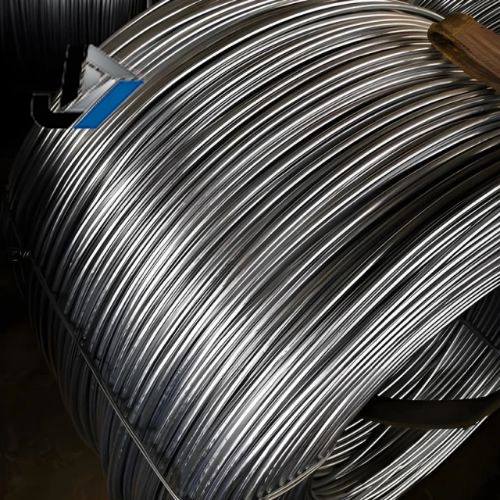
High Carbon Wire Rod

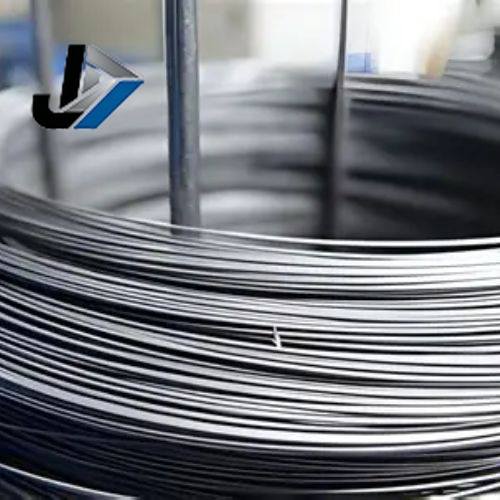
Low Carbon Wire Rod
What Changes with Carbon Content
| Property | Low carbon (approx. ≤0.20% C) | Medium carbon (approx. 0.30–0.50% C) | High carbon (approx. >0.60% C) |
|---|
| Property | Low carbon (approx. ≤0.20% C) | Medium carbon (approx. 0.30–0.50% C) | High carbon (approx. >0.60% C) |
|---|
| As-rolled hardness | Low | Moderate | High |
| Drawing behaviour | Easy, high reduction possible | Moderate, limited reduction per pass | Requires patenting and controlled passes |
| Ductility / elongation | High | Moderate | Lower, heat-treatment dependent |
| Achievable strength after processing | Moderate | Good | High |
| Weldability | Good | Fair | Limited |
| Typical failure if misused | Too weak for the duty | Poor forming or cracking | Wire breakage, kinking, brittle fracture |
Grades by Application
| Downstream process | Carbon level | Typical grades | What to specify |
|---|
| Downstream process | Carbon level | Typical grades | What to specify |
|---|
| General wire drawing, binding wire | Low | Q195, Q235, SA1006, SA1008, 1010 | Grade, diameter, coil weight, surface cleanliness |
| Nails, pins, staples, cold forging | Low | Q195, Q235, SA1006, 1010 | Surface quality, ductility, coil consistency |
| Welding wire and electrode core | Low | H08A class, 1010/1018 | Composition limits, surface, cleanliness |
| Wire mesh, gabions, fencing | Low or medium | Q235, 1018, 1022 | Diameter tolerance, coating where galvanized |
| Cold heading, screws, bolts | Medium | 10B21, ML35, 35#, 45# class | Composition, spheroidizing where required |
| Forging and machined blanks | Medium | 45#, 50Mn, 40Cr class | Composition, hardness, straightness |
| Springs, clips, wire forms | High | T9A, T10A, 70#, 65Mn, EN 10270 class | Grade, heat treatment expectation, target strength |
| PC wire and prestressed strand | High | 82B, 77B class | Patenting condition, drawing schedule, tensile target |
| High-strength wire, cable cores | High | 70#, 82B | Drawing route and final mechanical requirement |
Four Costly Specification Errors
1. Using low-carbon rod where strength is required.
A spring or high-strength wire made from Q235 rod will not reach the target load, and the failure appears only after the wire is in service.
2. Using high-carbon rod on a line that cannot handle it.
High-carbon rod needs patenting and controlled drawing. On a line set up for low-carbon rod, it causes breakage, die wear and rejected coils.
3. Specifying only grade and diameter.
For drawing, surface condition and coil geometry decide yield. Scratches, seams, folds, scale pits and residual oil become cracks after reduction; loose or collapsed coils cause snarling and downtime.
4. Comparing suppliers on price per ton only.
A slightly cheaper coil that produces 3% more breakage costs more than the saving. Compare usable output per ton, including downtime and die wear.
A Practical Selection Method
* Define the finished article and its required property — strength, ductility, coating, dimensional accuracy.
* Work backwards: which carbon level can reach that property after your processing route?
* Confirm your line's capability — patenting, annealing, drawing passes, coating.
* Fix the parameters that affect yield: surface requirement, coil weight, coil binding, storage condition.
* Set the verification: chemical analysis, tensile and elongation, bend or twist, coating mass, MTC per heat.
* Run a trial coil before a full order, especially for high-carbon grades.
Step 6 is the cheapest insurance available. A trial coil on your own line reveals problems that no certificate can.
CTA
Recommend the Grade Before You Buy
Send the downstream application, target wire diameter, required strength, grade or standard, coil weight and quantity. We will recommend the suitable carbon level and grade, and reply with an export quotation within 24 hours.