Manufacturing
U-Type vs Z-Type Sheet Pile: Which to Choose for Your Project
Selecting the right sheet pile profile is one of the earliest and most consequential decisions in any earth retention or waterfront project. The choice between U-type and Z-type sections affects not only structural performance but also installation speed, water tightness, and total installed cost. Getting it wrong can mean over-designing an expensive wall where a lighter section would suffice — or worse, under-designing a critical retaining structure that fails during excavation.
This guide compares U-type (Larsen) and Z-type sheet piles across the parameters that matter to engineers and procurement teams: section modulus efficiency, interlock behavior, driving characteristics, availability, and cost. By the end, you will have a practical decision framework rather than a generic preference for one profile over the other.
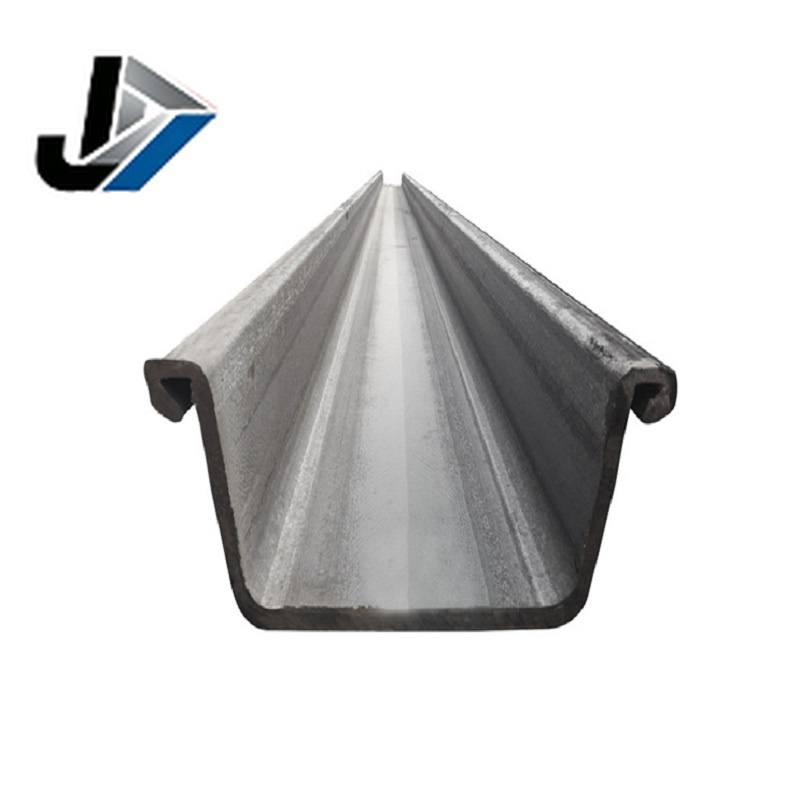
U-Type Sheet Pile
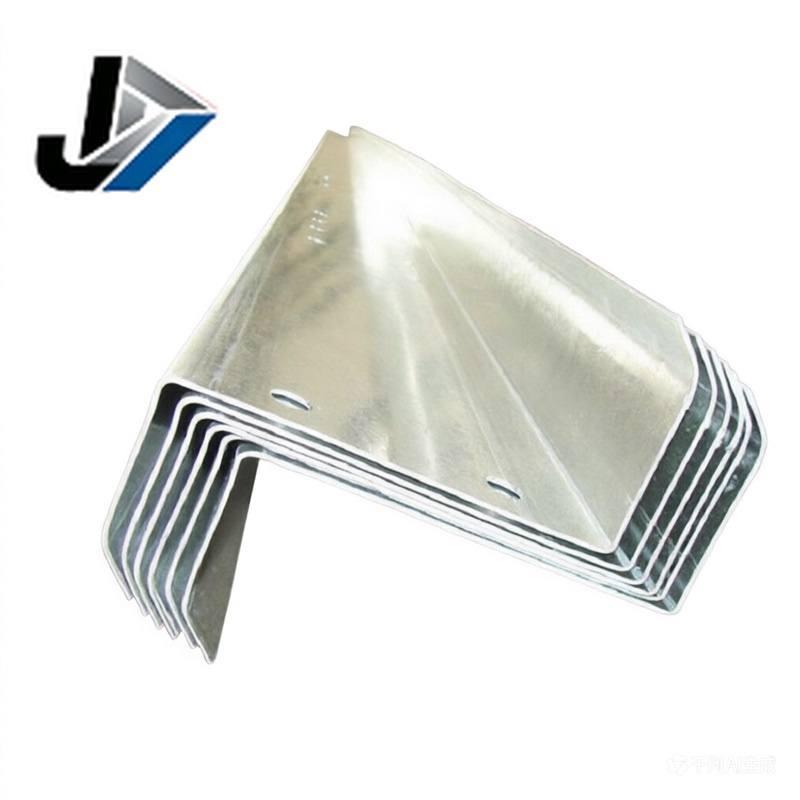
Z-Type Sheet Pile
U-Type (Larsen) Sheet Piles: Overview
History and Naming Origin
The U-type sheet pile traces its lineage to the Larsen pile, patented by Danish engineer Trygve Larsen in the early 20th century. The original design featured a U-shaped cross-section with integral interlocks formed at the flange tips. Over decades, major European and Japanese mills refined the geometry, but the fundamental U-channel concept remains. In many markets, "Larsen pile" is still used as shorthand for any U-profile sheet pile, regardless of manufacturer.
Cross-Section Characteristics
A U-type pile has two parallel flanges connected by a web, forming an open channel. The interlocks are located at the outer edges of the flanges. When two adjacent piles are interlocked and driven, they form a continuous wall with alternating U-channels facing opposite directions.
Key geometric properties:
Typical Applications
Advantages and Limitations
Advantages:
Limitations:
Z-Type Sheet Piles: Overview
Cross-Section Characteristics
The Z-type profile gets its name from the zigzag shape of the cross-section when viewed end-on. Unlike the U-type, the Z-profile features a continuous web that passes through the neutral axis of the composite wall section. This is the single most important geometric distinction between the two types.
In a completed wall, adjacent Z-piles nest together so that the webs of neighboring piles align along the wall's neutral axis. The result is that nearly all of the steel in the web contributes directly to bending resistance, rather than sitting idle near the neutral axis.
Key geometric properties:
Why Z Sections Offer Higher Section Modulus per Unit Weight
The engineering principle is straightforward: bending resistance depends on how far material is distributed from the neutral axis. In a U-pile wall, the neutral axis runs through the center of each web, and significant web area clusters around it. In a Z-pile wall, the staggered nesting arrangement places the combined neutral axis at the interface between adjacent webs, so virtually every gram of steel works at maximum lever arm. This geometric advantage translates directly into either lighter sections for the same design moment or greater capacity at the same weight.
Typical Applications
Advantages and Limitations
Advantages:
Limitations:
Head-to-Head Comparison Table
Decision Framework: When to Choose Which
Rather than declaring a universal winner, apply this practical framework to your specific project conditions:
Shallow Retaining Walls (≤6 m Cantilever)
U-type piles are typically sufficient and often more economical. The section modulus demand is modest, so the efficiency advantage of Z-sections does not justify their potentially higher unit cost or limited availability. The easier driving characteristics also reduce installation risk on smaller sites.
Deep Excavations and High Bending Moments (>8 m)
Z-type piles become increasingly economical as depth increases. The 20–35% improvement in section modulus per kg/m means you may drop one or two size categories compared to a U-type solution, saving significant tonnage. On a 500-tonne wall, even a 10% reduction represents 50 tonnes of steel savings plus corresponding handling and driving cost reductions.
Water Tightness Is Critical
Compare specific interlock designs rather than relying solely on profile type. Modern Z-sections generally offer better inherent water tightness due to fewer joints and tighter interlock geometry. However, U-sections with properly applied sealants and welded clutch bars can achieve comparable performance. Specify water tightness testing requirements (e.g., permeability class per EN 10248) regardless of profile chosen.
Budget-Constrained Projects
Evaluate total installed cost, not just unit price per tonne. A cheaper-per-tonne U-section that requires 30% more steel and longer driving time may cost more overall than a premium Z-section. Request quotations for both options including estimated driving hours, crane time, and ancillary materials before deciding.
Real-World Selection Examples
Example 1: Urban basement excavation, 5 m depth, sandy soil. The design moment was modest, and the site had limited headroom for large vibratory hammers. A U-type AZ-18 equivalent section was selected for its easy driving characteristics and adequate bending capacity. Total wall length was 120 m; installation completed in four days with no alignment issues.
Example 2: River quay wall, 12 m retained height, tidal environment. Bending moments were governed by hydrostatic pressure differential and berthing loads. A Z-type Z-26 equivalent section provided the required section modulus at 18% less tonnage than the nearest U-type alternative. The reduced joint count also simplified water tightness detailing in the tidal zone. Installation required an experienced crew but proceeded without interlock damage.
Example 3: Temporary cofferdam, 7 m depth, 4-month duration. Both profiles were technically viable. The contractor chose U-type based on existing inventory and crew familiarity, accepting a slight tonnage premium in exchange for zero mobilization delay and proven installation procedures. The cost-benefit analysis favored schedule certainty over material optimization for this short-duration application.
Common Misconceptions
"Z-Type Is Always Better Than U-Type"
Not true. Z-sections excel in moment-governed deep walls, but for shallow applications where stiffness rather than strength controls design, the efficiency advantage disappears. Additionally, site-specific factors like crew experience, equipment availability, and supply chain constraints can make U-type the more pragmatic choice even when Z-type is theoretically optimal.
"Thicker Steel Means a Stronger Wall"
Thickness alone is a poor predictor of bending performance. Section modulus (W) determines bending resistance, and W depends on the distribution of material relative to the neutral axis, not merely on cross-sectional area. A thinner Z-section can outperform a thicker U-section because its geometry places more material at effective distances from the neutral axis. Always compare published section modulus values rather than assuming thickness correlates with capacity.
"All Sheet Piles Are Interchangeable Between Standards"
Different manufacturing standards (EN 10248 for hot rolled, EN 10249 for cold formed) govern different product families. Within each standard, U and Z profiles have distinct dimensional tolerances, interlock specifications, and testing requirements. Substituting one for the other requires explicit engineering review and approval — never assume equivalence based on nominal dimensions alone.
Conclusion
Profile selection is a design decision, not a purchasing preference. Start with your geotechnical parameters, calculate the required section modulus and allowable deflection, then evaluate both U-type and Z-type options against those requirements. Consider total installed cost, site logistics, crew capability, and supply reliability alongside raw material specifications.
When the analysis points clearly to one profile, the choice is straightforward. When both are viable, the tiebreaker is usually total cost and schedule risk — not theoretical superiority.
Need help evaluating sheet pile options for your project? JUDE STEEL supplies hot rolled Z-type and U-type sheet piles to EN 10248 and ASTM standards. Our engineering team can provide section-specific recommendations, mill test certificates, and competitive quotations tailored to your project requirements.
Author Bio: JUDE STEEL is a steel materials and processing partner serving construction, infrastructure, and international project procurement. We specialize in hot rolled sheet piles, Z-type steel sheet piling, and Q235B flat bars for global export. for technical support and quotations.
Related Articles
Previous page: The causes and treatment methods of stainless steel rusting
Message
JuDe Steel Co., Ltd.
Reach out via our contact form or use the details. We’re here to help!
LOGO
Get A Quote