How to Choose the Right EN 10346 Grade for Galvanized Steel Wire
How to Choose the Right EN 10346 Grade for Galvanized Steel Wire
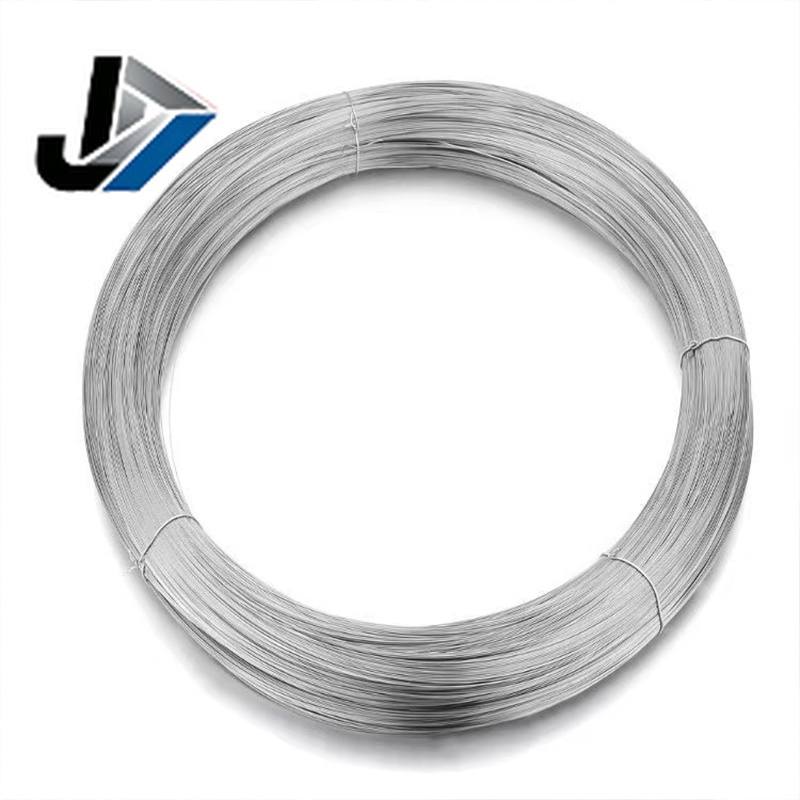
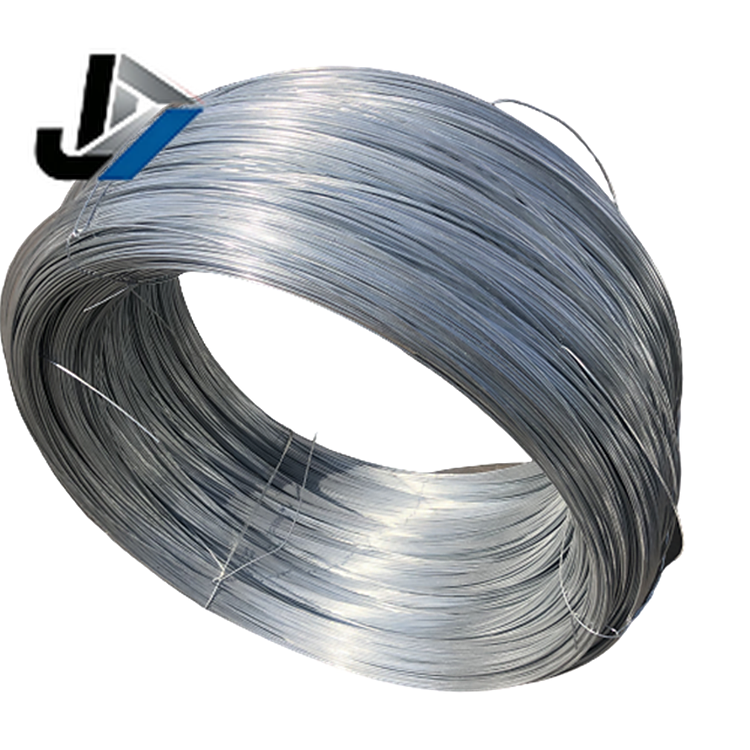
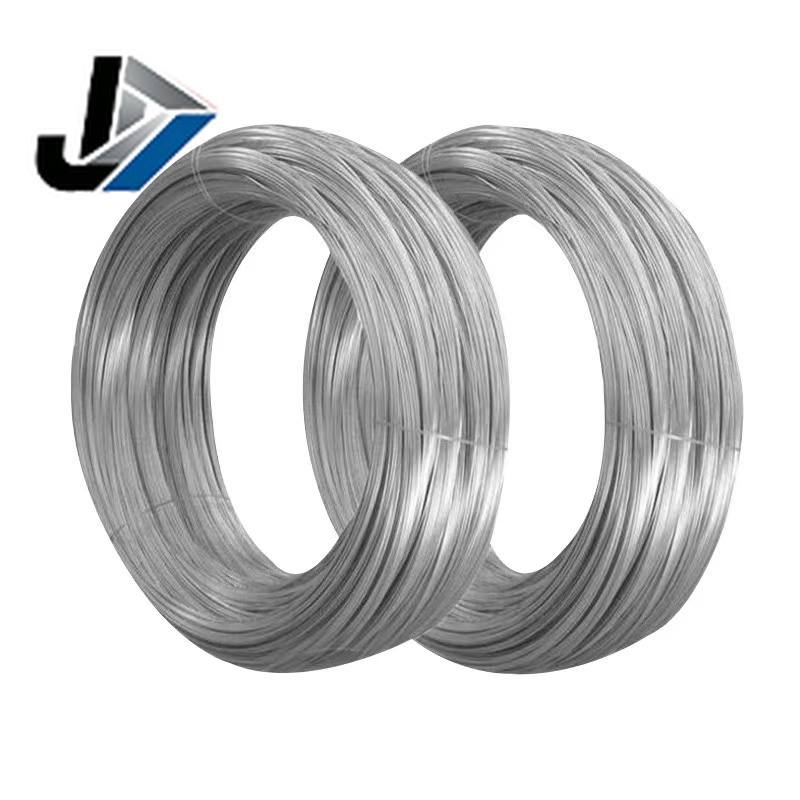
For most welded mesh, fencing, binding, simple brackets and general hardware, DX51D+Z is the most cost-effective starting point. If the wire must be woven, crimped, bent tightly or drawn further without coating damage, DX52D+Z or DX53D+Z usually gives a safer margin.
DX51D+Z vs DX52D+Z vs DX53D+Z: Where Each Grade Fits
Why Coating Mass Matters as Much as Grade
Common Application Scenarios
DX51D+Z works well for general welded mesh where the bending radius is not extreme. If the mesh requires very tight crimps or heavy weaving, DX52D+Z or DX53D+Z may reduce coating cracking risk.
For farm fencing, garden mesh, animal enclosures and general site fencing, DX51D+Z with Z180 or Z275 coating is a practical combination. The environment matters more than the grade alone.
Construction binding wire, bundling wire and general site tie wire usually need moderate strength and reliable corrosion resistance. DX51D+Z soft or half-hard temper is often sufficient.
Simple brackets, clips, pins and retail display parts can use DX51D+Z. If the part involves deeper drawing or tighter radii, upgrade to DX52D+Z or DX53D+Z.
Where the wire or strip is roll-formed, bent or assembled into ventilation components, DX51D+Z offers stable performance at a lower cost than higher-draw grades.
Three Selection Rules for Buyers
If the wire only needs bending, tying or mesh welding, DX51D+Z is usually enough. If it must be drawn, crimped or bent repeatedly, consider DX52D+Z or DX53D+Z.
Indoor or sheltered use can accept Z100–Z140. General outdoor use benefits from Z180. Coastal, humid or long-life projects should consider Z275.
Galvanized wire is not only about grade and coating mass. Straightness, tensile strength, elongation, coating adhesion and bend performance should be agreed before production, especially for automated mesh lines.
When Not to Use DX51D+Z Wire
* If the application requires high tensile load, such as springs, guy wires or high-tension fencing, a high-carbon galvanized wire is more suitable.
* If the process involves severe deep drawing, DX54D+Z or another deep-drawing grade may be required.
* If the service environment involves sustained high temperature, galvanized coatings are not appropriate and stainless steel wire should be considered.
* If the wire will be heavily abraded or continuously flexed, coating adhesion and bend testing should be specified explicitly.
Summary
If you are comparing DX51D+Z, DX52D+Z and DX53D+Z galvanized wire for a mesh, fencing or fabrication project, share the application environment, bend detail, target diameter and coating mass. We can help confirm the most suitable EN 10346 grade and coating level before quotation.
Call to Action
TEL:+86 19063793739 / +86 029 86382955
WhatsApp:+86 19033681875
Email:judesteel@juqing.hk
Factory audit, sample coils and third-party inspection are welcome.FAQ
It is an EN 10346 designation: DX for cold-forming quality, 51 for the commercial forming grade, D for the strip condition, and +Z for a hot-dip zinc coating. Coating mass is specified separately, for example Z180 or Z275.
Formability level. DX52D+Z has lower yield strength and higher elongation than DX51D+Z, making it better for light drawing, bending and simple stamping. If your process only needs roll forming or simple bending, DX51D+Z may be sufficient.
No. DX53D+Z is a drawing grade with higher elongation and better deep-drawing behaviour. DX51D+Z is suitable for commercial forming and general fabrication, and is usually more economical where deep-drawing severity is not required.
Not usually. It is selected for formability, not tensile strength. For load-driven duties, high-carbon galvanized wire is the correct product.
Commonly 0.5–6.0 mm as coils, straightened cut lengths, welded mesh and formed parts, with other sizes and forms available on request.
Coating adhesion depends on coating mass, bend radius and process. Because DX54D+Z uses a deep-drawing base strip, it performs better at tight bends than commercial grades, but bend and adhesion requirements should still be stated in the order.
No. Zinc coatings are unsuitable for sustained high temperature, and the coating is damaged well below the melting point of zinc. For high-temperature service, stainless steel wire is the appropriate family.
By exposure: Z100 for sheltered or indoor use, Z140–Z180 for general outdoor service, Z200–Z275 for heavier or coastal-adjacent exposure. Tell us the environment and design life and we will recommend a mass.
Yes. An MTC is provided with each shipment showing grade, diameter, heat number and test results, and third-party inspection by SGS, BV or TUV can be arranged.
Message
Reach out via our contact form or use the details. We’re here to help!
LOGO