Start From the Service Condition, Not From the Grade
Most wrong specifications begin the same way: someone asks for "stainless wire, 2 mm" and the supplier quotes the cheapest austenitic grade. Stainless steel is not one material with one behaviour — it is several alloy families with different strengths, and the grade that wins depends entirely on what the wire has to survive.
Before comparing grades, fix three facts:
- What is the dominant stress? Aqueous corrosion, chloride pitting, high-temperature oxidation, mechanical load, or a combination.
- What is the temperature? Room temperature, warm service, or sustained heat above roughly 600 °C.
- What happens after the wire arrives? Welded, formed, woven into mesh, or used as-is.
With those three answers, the choice between 304, 316, 310 and 2205 usually becomes obvious. Without them, any quotation is a guess.
 304 / 304L Stainless Steel Wire
 316/ 316L Stainless Steel Wire
310 Stainless Steel Wire
2205 / Duplex Stainless Wire
The Four Grades in One Line Each
- 304 / 304L — the general-purpose austenitic wire. Good all-round corrosion resistance, good formability, lowest cost of the four. The default when nothing aggressive is present.
- 316 / 316L — 304 with molybdenum. Noticeably better resistance to chlorides and pitting, and better in acidic and marine environments. The default for outdoor, coastal and chemical contact.
- 310 / 310S / 310H — high-chromium, high-nickel austenitic wire chosen for oxidation resistance and creep strength at elevated temperature. A heat-resistance grade, not a general corrosion grade.
2205 (S31803 / S32205) — a duplex wire, roughly twice the yield strength of the austenitic grades, with strong chloride and stress-corrosion resistance. The choice for high strength plus aggressive chloride service.
Composition and Property Comparison
Values are indicative and vary with standard, diameter and processing condition. The governing figures are those in the applicable standard and in the mill test certificate for the delivered heat.
| Item | 304 / 304L | 316 / 316L | 310 / 310S | 2205 |
|---|
| Item | 304 / 304L | 316 / 316L | 310 / 310S | 2205 |
|---|
| Family | Austenitic | Austenitic | Austenitic | Duplex (austenite + ferrite) |
| Chromium (Cr) | approx. 18–20% | approx. 16–18% | approx. 24–26% | approx. 21–23% |
| Nickel (Ni) | approx. 8–10.5% | approx. 10–14% | approx. 19–22% | approx. 4.5–6.5% |
| Molybdenum (Mo) | — | approx. 2–3% | — | approx. 2.5–3.5% |
| Nitrogen (N) | trace | trace | trace | approx. 0.08–0.20% |
| Yield strength (indicative) | approx. 200–350 MPa (temper dependent) | approx. 200–350 MPa (temper dependent) | approx. 250–400 MPa | approx. 450–650 MPa |
| Oxidation / heat resistance | Fair | Fair | Excellent | Good, but not its main role |
| Chloride pitting resistance | Moderate | Good | Moderate | Very good |
| Cost position | Lowest | Moderate | Higher | Higher |
Reading the table: 304 and 316 differ mainly by molybdenum, which is what buys pitting resistance. 310 differs by chromium and nickel, which is what buys oxidation resistance. 2205 differs by structure — duplex — which is what buys strength and stress-corrosion resistance.
Decision Table: Which Grade for Which Condition
| Service condition | Recommended grade | Why |
|---|
| Service condition | Recommended grade | Why |
|---|
| Indoor mesh, screens, general hardware | 304 | Adequate resistance, best cost |
| Outdoor, coastal, marine, salt spray | 316 / 316L | Molybdenum improves pitting resistance |
| Chemical, acidic or process-water contact | 316 / 316L | Better resistance to acidic and chloride media |
| Food, beverage, pharma, hygienic parts | 304 or 316L | Cleanability plus 316L where chloride or acid cleaning occurs |
| Furnace, kiln, oven, burner hardware | 310 / 310S | Stable oxide scale and creep strength at heat |
| Long-term load at high temperature | 310H | Higher carbon improves creep and stress-rupture behaviour |
| High-strength wire, springs, load-bearing mesh | 2205 | Roughly double the yield strength of austenitic wire |
| Chloride plus stress (pools, seawater, chemical plant) | 2205 | Strong resistance to chloride SCC and pitting |
| Welded assemblies after forming | 304L / 316L / 310S | Low-carbon grades reduce sensitization risk |
Four Misuses We See Repeatedly
1. Using 304 in a coastal or chloride environment.
304 will pit and stain where 316 would perform. The saving on the wire is usually smaller than the cost of replacement, especially for mesh and installed components.
2. Using 316 where the real requirement is heat.
316 has reasonable heat resistance but is not a heat-resistance grade. In sustained furnace service it scales and softens; 310 is the correct family.
3. Using 310 as a "premium corrosion wire."
310 is optimized for oxidation, not for chloride pitting. Specifying it for marine or pool service is both more expensive and technically weaker than 316L or 2205.
4. Specifying austenitic wire where strength drives the design.
If the component is sized by load, 2205 can allow a smaller diameter and lower weight. Comparing only price per ton hides this — compare cost per functional part.
Two Engineering Cautions Worth Stating Early
Sigma-phase embrittlement (310 family). Extended holding in roughly the 700–900 °C range can precipitate sigma phase and reduce toughness. If the process dwells in that window, the grade and heat-treatment route should be reviewed before ordering.
Duplex processing limits (2205). 2205 is strong but less forgiving in forming and welding than austenitic grades; excessive cold work or incorrect welding practice can degrade its corrosion performance. Tell us if the wire will be welded or heavily formed.
Both cautions are avoidable when the supplier knows the application. They are the main reason we ask for the service condition before quoting.
How to Specify the Wire Correctly
* Grade and standard — state the governing standard (ASTM A580, GB/T 4240, JIS G4309, EN 10088-3 or your own specification), not only the grade name.
* Diameter and tolerance — include the tolerance you can accept on the line.
* Finish — bright annealed, pickled matte, polished or oiled.
* Temper — annealed, quarter/half hard or spring temper.
* Form — coil, straightened cut length, mesh, spring or formed part.
* Downstream work — welding, forming, weaving, coating.
* Verification — composition, tensile, elongation, hardness, plus third-party inspection if required.
Items 1 and 6 settle most disputes before production rather than at delivery.
CTA
Send the service condition, not just the diameter
Tell us the environment, temperature, load, target diameter, finish, quantity and destination port — and whether the wire will be welded or formed. Our technical team will recommend the correct grade and reply with an export quotation within 24 hours.
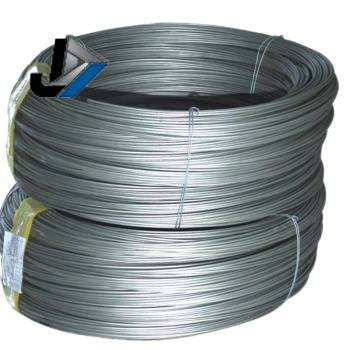 304 / 304L Stainless Steel Wire
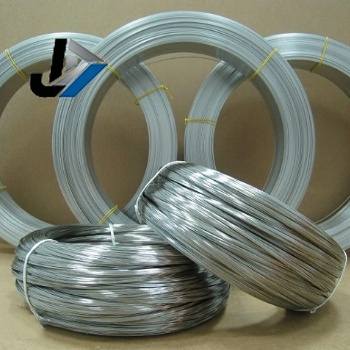 316/ 316L Stainless Steel Wire
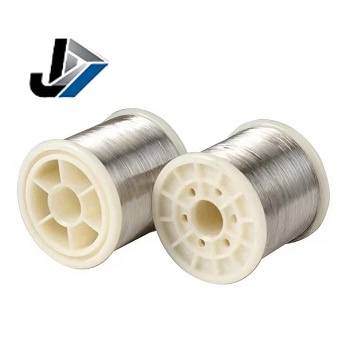 310 Stainless Steel Wire
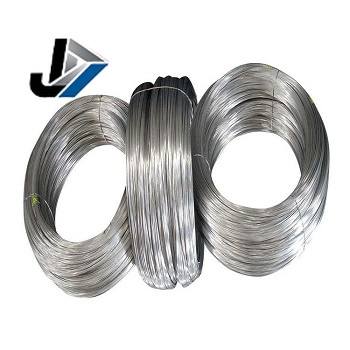 2205 / Duplex Stainless Wire