The Enquiry That Causes Most Confusion
A familiar enquiry arrives: "Please quote 16Mn I beams, 32b, 200 tons." The mill, however, issues the certificate as Q345B or Q355B. The buyer asks whether the wrong material has been supplied.
It has not. The confusion comes from a standard revision that happened decades ago, while the trade name survived. This article explains what changed, why the newer grades are technically better, and what it means for your certificate, your inspection and your erection schedule.

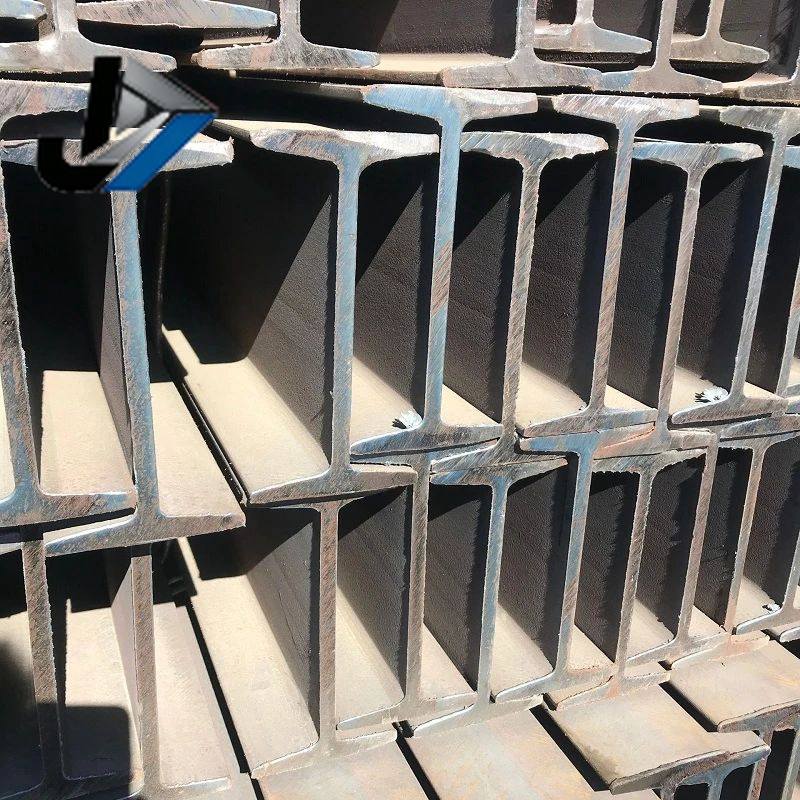
16Mn I beam
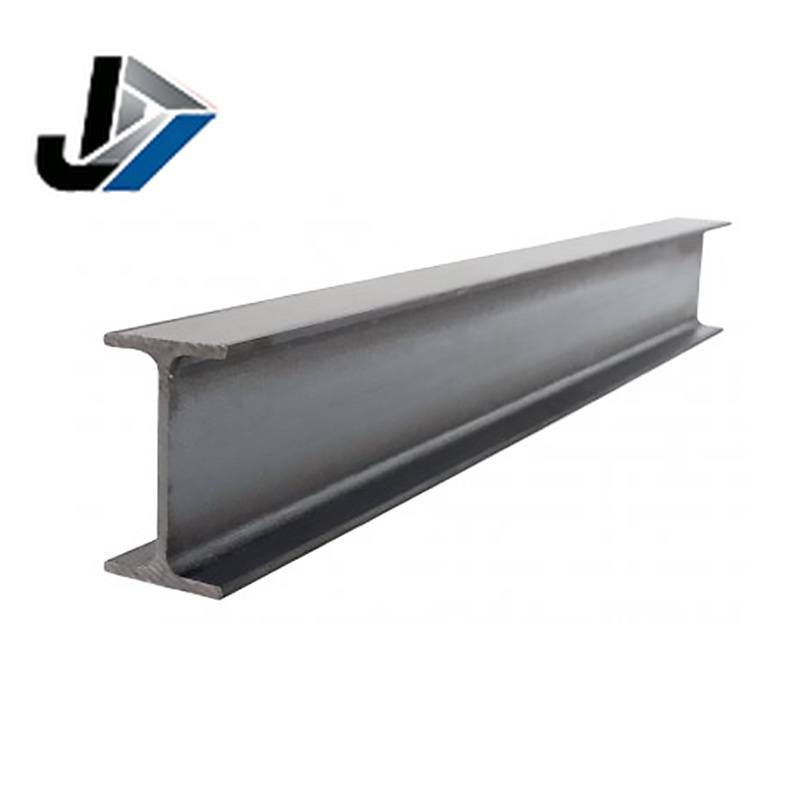
hot rolled I beam 16Mn
Timeline: How the Designation Changed
| Standard version | Grade designation | Status |
|---|
| Standard version | Grade designation | Status |
|---|
| GB 1591-1988 | 16Mn | Withdrawn; still used colloquially in drawings and enquiries |
| GB/T 1591-1994 | Q345 (A–E) | Superseded 16Mn; long the default supply grade for "16Mn" orders |
| GB/T 1591-2018 | Q355 (A–E) | Current grade; Q345 aligned with the Q355 series |
The naming logic also changed. 16Mn is a composition-based name: "16" points to roughly 0.16% carbon and "Mn" identifies manganese as the main alloy. Q345 / Q355 are strength-based names: "Q" stands for yield point and the number gives the lower yield strength in MPa for the reference thickness. The shift mirrors what happened in Europe when EN 10025 replaced older national grades with the S-series. For buyers, the practical consequence is straightforward: a drawing that says 16Mn is normally fulfilled with Q345B or Q355B, and the delivered grade should be stated explicitly on the quotation and the mill test certificate.
What Actually Changed in the Steel
The revision was not only a renaming. Three metallurgical differences matter to engineers.
1. Micro-alloying
Q345 and Q355 grades may contain vanadium, titanium and niobium additions, which refine grain size and increase strength through precipitation and grain refinement. Original 16Mn relied mainly on manganese solid-solution strengthening.
2. Tighter impurity control
Phosphorus and sulfur limits are stricter in the newer grades, which improves through-thickness behaviour and reduces the risk of hot shortness and lamellar tearing in welded joints.
3. Formalized impact requirements
The Q-series uses quality grades A to E with defined Charpy V-notch requirements, including sub-zero test temperatures. The old 16Mn designation did not carry the same structured toughness ladder, so low-temperature performance was less clearly specified.
The net effect: Q345 and Q355 offer better and more predictable toughness than the legacy 16Mn, particularly for welded structures and cold-service conditions.
Composition and Properties at a Glance
Values below are indicative and thickness-dependent; the governing figures are those in the applicable standard and the mill test certificate for the delivered heat.
| Item | 16Mn (legacy) | Q345B | Q355B |
|---|
| Item | 16Mn (legacy) | Q345B | Q355B |
|---|
| Carbon (C) | approx. 0.12–0.20% | typically ≤ 0.20% | typically ≤ 0.20% |
| Manganese (Mn) | approx. 1.20–1.60% | up to approx. 1.70% | up to approx. 1.70% |
| Micro-alloys (V/Ti/Nb) | not characteristic | permitted | permitted |
| Yield strength (reference thickness) | 345 MPa class | approx. 345 MPa | approx. 355 MPa |
| Tensile strength | approx. 470–660 MPa | approx. 470–630 MPa | approx. 470–630 MPa |
| Impact requirement | not structured by quality grade | approx. 27 J at +20 °C | approx. 27 J at +20 °C |
| Low-temperature options | limited by designation | C/D/E grades for 0 °C, −20 °C, −40 °C | C/D/E grades for 0 °C, −20 °C, −40 °C |
Two observations follow. First, 16Mn and Q345 are close in strength, which is why substitution has been accepted in practice for thirty years. Second, the meaningful upgrade is in toughness control and impurity limits, not in a large jump in yield strength.
Why This Matters to a Buyer, Not Just an Engineer
Certificates and acceptance
If a project specification still reads "16Mn", the certificate showing Q345B or Q355B can trigger a query at delivery. Resolve this before production, not at the port: agree the acceptable current grade in writing and have the equivalence noted on the quotation.
Design life and welding
For welded frames, crane beams and cold-region structures, the newer grades are the better engineering choice. Specifying a withdrawn grade can mean specifying a lower toughness requirement than the project actually needs.
International comparison
Buyers often try to map the grade onto a Western equivalent. The nearest commonly cited counterparts are EN 10025-2 S355 and ASTM A572 Grade 50. These are comparable in strength class but not interchangeable: composition limits, deoxidation practice, impact test temperatures, tolerances and certification requirements differ. State the governing standard rather than relying on an equivalence table.
Cost and availability
Q345B and Q355B are mainstream production grades with wide mill availability, so lead times and pricing are usually more stable than for a special or legacy-grade request. Ordering to a withdrawn designation can create unnecessary mill negotiation without improving the structure.
Which Grade Should You Specify?
| Situation | Practical direction |
|---|
| Situation | Practical direction |
|---|
| Existing drawing or BOQ says "16Mn" | Accept Q345B or Q355B in writing; note equivalence on the order |
| New project, temperate climate, welded frame | Q355B (or S355JR where EN applies) |
| Winter erection or cold service | Q355C / Q355D (or S355J0 / S355J2) according to design temperature |
| Bolted structures with limited welding | Q355A/B usually sufficient |
| Heavy plate, thick welded joints | Confirm through-thickness and impact requirements with the engineer |
| Pressure or low-temperature service | Use the dedicated pressure-vessel standard and grade, not a structural grade |
The general rule: specify the current grade and the required impact temperature, and let the certificate match the order.
A Short Checklist Before You Order
- Does the drawing cite a standard version, or only the grade name?
- Which current grade will be delivered and certified — Q345B or Q355B?
- What impact temperature does the design require, and which quality grade covers it?
- Is the governing standard GB, EN or ASTM, and is that stated on the order?
- Will the MTC show the same grade as the purchase order?
- Are cut, drilled and welded members required, and does fabrication affect the grade or heat traceability?
- Is third-party inspection needed before loading?
Answering items 2 and 4 in writing removes most of the disputes that appear at delivery.
Conclusion: The Name Changed, the Requirement Should Not
16Mn remains a familiar name in drawings and enquiries, but it belongs to a withdrawn standard. Its successors, Q345 and now Q355, deliver the same strength class with better micro-alloying, tighter impurity control and a structured toughness ladder. For buyers, the correct response is not to insist on an obsolete label, but to confirm the delivered grade, the impact requirement and the governing standard before production starts. If your specification still says 16Mn, send it to us. We will confirm the current equivalent grade with your engineer, state it clearly on the quotation, and supply sections cut, drilled and certified accordingly.
CTA Section
Specify the Right Grade Before Production
Send us your drawing or member schedule and we will confirm the correct current grade, the suitable quality grade for your service temperature, and the fabrication scope — then reply with an export quotation within 24 hours.
- Grade and standard shown on the quotation and the MTC
- Cutting, drilling, welding, blasting and galvanizing in-house
- MTC with each shipment; third-party inspection (SGS / BV / TUV) on request
Tel: +86 029 86382955
WhatsApp: +86 19033681875
Email: judesteel@juqing.hk